Showing posts with label kentsfield. Show all posts

Sunday, March 11, 2007

Tech Link (Motherboard): A1 Revising your Motherboards for Kentsfield

If you are unfortunate enough not to be able to replace your 680i-based board with a Kentsfield-overclocking version, then you might want to do this mod. vr-zone has a guide that not only covers eVGA's, but also on ASUS P5N32-E SLI or ASUS Striker Extreme. Note that eVGA is using NVIDIA*'s reference board, so mod on the eVGA is, theoretically, doable on other reference boards as well (Asus* is an ODM, so they make their own design). Anyway, check it out...


About two weeks ago, EVGA announced that their NVIDIA 680i SLI Motherboards have gone into the Revision A1 state, an updated revision with improved overclocking for the Quad Core Kentsfield Users. As a show of their good customer service, they have offered direct cross swap for all customers of the first version of EVGA 680i boards and to cover the shipping costs both directions.

It's all good and easy if you live in the US, but some staying in certain countries may even find this "win-win" arrangement difficult... Or even, those with NVIDIA Reference boards but not under the EVGA brand name might not even be offered this service. Or even, those with non-reference 680i motherboards, what to do? I was lucky enough to receive a A1 revision and checked out what is it that is actually changed:


Source:A1 Revising your Motherboards for Kentsfield

Tuesday, January 09, 2007

Press Release: New Intel Processors Expand Quad-Core PC, Server Line-Ups

It is now official, Intel finally unleashed new mainstream quad core processor targetted for high end computing at a mainstream price, relatively speaking. Don't get any impression that this lower-clocked quadcore is cheap, while the word expensive might come to mind, it is important to remember that this isn't targetted for everyone, only for those who have a need for quad core computing, whether business or benchmarking or plain pimping. Expand to read the full press release...


Intel® Core™ 2 Quad Processor Jump Starts Digital Applications, Software and Devices; Two More Server Quad-Core Products Introduced
INTERNATIONAL 2007 CONSUMER ELECTRONICS SHOW, Las Vegas, Jan. 8, 2007 –Intel Corporation formally introduced three more quad-core processors, including the first to carry the Intel® Core™2 Quad processor brand name that begins the expansion of quad-core PC sales to mainstream buyers. Intel now offers a total of nine quad-core processor versions in the desktop and enterprise market segments.

The Intel Core 2 Quad processor packs four brains in every PC and delivers the immense speed and responsiveness that is increasingly required to process today's most demanding media-intensive applications. This processor is available in PCs and in the reseller channel immediately. Intel also announced two quad-core processors for single-socket servers. Today's announcement builds on the company's revolutionary Intel Core 2 Duo and quad-core microprocessor families, with 29 dual and quad-core processors for sale in the desktop PC, laptop and server market segments.

"Today Intel delivers another breakthrough—quad-core technology for anyone's PC," said Intel President and CEO Paul Otellini. "The performance once requiring a supercomputer is now on the desktop, allowing you to do new and amazing things."

Intel's multi-core processors are designed to enhance the computer user's experience from start to finish. These microprocessors, which are based on the Intel® Core™ microarchitecture, target performance desktop and gaming PCs and will benefit from highly threaded software applications that target these market segments. Intel is actively working with software developers on threading applications and next-generation games that will be able to take advantage of quad-core microprocessors. The four cores make quad-core based computers the ideal choice for processor intensive, highly threaded applications such as Adobe After Effects*, Premiere Pro 2.0*, Windows Media Encoder*, Snapstream* and Win DVD*. Combined with the availability of Microsoft Windows Vista*, this launch marks a rare occurrence in which new processors and a new operating system hit the market about the same time.

In addition to new levels of performance, these products bring consumers multitasking capabilities that enhance the way they create, experience and enjoy digital entertainment. Computers with the Intel Core 2 Quad processor are excellent for high-definition video entertainment and are multimedia powerhouses for demanding software applications run simultaneously. With four compute cores, the processor is uniquely designed for running multiple digital streams throughout the home – making it the ultimate entertainment engine for Intel® Viiv™ technology-based PCs.

New Quad-Core Server Processors
Intel also introduced today the Quad-Core Intel® Xeon® Processor 3200 series for single-socket servers. Built on the Intel Core microarchitecture, these products will bring new levels of energy-efficient performance to entry server applications such as e-mail, Web, file and print. Two new processors are available today with clock speeds of 2.4 and 2.13 GHz with a 1066 front side bus and 8 MB of L2 cache.

Intel has made this next step in the computer's ongoing evolution as fast and easy as possible through continued investment in silicon process and manufacturing technology. Intel's advanced processes can help reduce the amount of energy required to run computers and "shrink" a processor's make-up to place multiple cores inside one product at more affordable prices.

Pricing and Availability
The new Intel Core 2 Quad processor Q6600 (2.4GHz) has been announced and is currently being demonstrated at CES. It is available now at $851 in 1KU quantities. Quad-Core Intel® Xeon® processor pricing includes the X3220 (2.4GHz) at $851 and the Quad-Core Intel® Xeon® Processor X3210 (2.13GHz) at $690.


Source:New Intel Processors Expand Quad-Core PC, Server Line-Ups

Thursday, December 28, 2006

Press Release: ASUS Commando Gaming Motherboard Enables System Bus Overclock up to 2,280MHz for Smooth Graphics Performance

Woah, this is going to be my next board from Asus. I have posted some early reviews and benchmarks of this board, and if you haven't seen it yet, better check it out and start saving up. Aside from the all-solid capacitor and on-board switches, the CPU socket area is free of capacitors! Way to go Asus!


Taipei, Taiwan, December 18, 2006 – ASUSTeK Computer Inc. (ASUS), the worldwide leader of motherboards, today introduced the Commando, a new addition to its R.O.G (Republic of Gamers) family of gaming motherboards. The Commando provides extreme overclock ability for enhanced performance, and unique features to jazz up the gaming features and simplify the DIY process.

Overclock system bus up to 2,280MHz
Supporting the Intel® P965 Express Chipset, maximum 8GB dual-channel DDR2 architecture, PCI Express x16 graphics and multi-core CPU, the Commando is ready for the latest computing hardware and software specifications. With superior engineering, the Commando provides unmatched overclockability, taking FSB and memory up to 2,280MHz and 1,300MHz, respectively.

Extreme Tweaker – One stop performance tune-up
Extreme Tweaker is a one stop solution for fine-tuning system performance. Frequency adjustment, over-voltage options, memory settings etc. can all be tweaked with this feature, which is found exclusively in ASUS motherboards.

8-phase cap-less power – Reliable power supply and longer component life
The 8-phase cap-less power design demonstrates two hardcore commitments of R.O.G.: ultimate overclocking capability, and trustworthy stability. 8-phase cap-less power yields unparalleled superiority in the overclocking arena, while the EL cap-less design removes any worries of capacitor problems once and for all.

Onboard Switch – Turn system on/off, reset and clear CMOS with one push of a button
Overclockers and power users typically build systems outside of the case, and hence they need to short the front panel pins to power up or restart the system, switch jumpers, and pop the battery to clear CMOS. With the Commando, doing all that is now just a push of a button.

LCD Poster – Easy System Tweaking with Style
Most hardcore users and engineers install a debug card, which displays a two-digit code that enables them to recognize which part of the system is responsible for hanging the system during boot-up. LCD Poster, located at the back I/O, displays the names of each boot-process instead of using codes. When system hangs due to faulty connection or configuration, the LCD Poster will freeze on the displayed process name that caused the hang up, allowing users to know exactly what needs to be fixed.

For more information on the Commando and other R.O.G motherboards, please visit the company website at www.asus.com.

Specification summary
CPU: LGA 775 Core2Duo, Quad-Core CPU
DDR2: 800/667/533
FSB: 1066/800
Chipsets: Intel P965 + ICH8R
6 SATA II 3Gb/s
Supports ATI Crossfire Graphics
SupremeFX Featuring ADI 1988b
Extreme Tweaker
LCD Poster
8 phase capless power design
Onboard switches


Source:ASUS Commando Gaming Motherboard Enables System Bus Overclock up to 2,280MHz for Smooth Graphics Performance

Monday, December 25, 2006

Misc: All I Want For Christmas is....

Images with a girl model owned and came from THG
So, it's Christmas time today. We just finished our tradition of sharing food come Christmas Eve on 00:00 hours. It's fun and lively, and we got to open up our gifts and I'm satisfied with I got from wifey.

However, I still have requests, not from wifey, but from my very own pocket. Somehow, I need to raise my money of my own and get myself a piece of hardware. This has been a nagging target since the product has been announced, since I've seen the very first review, and since I first lay my eyes on it on the announcement page. I just can't help but drool, I so want this hardware. What is it you ask? Well, let me list it for you.

So, I already have an Intel® Core™ 2 Extreme QX6700 and Intel® Core™ 2 Extreme X6800. These CPUs are a total kick ass and has been very good with me so far. They overclock really well, and both can do 3.73GHz even on stock cooler. And for higher than such overclock, an aftermarket cooler and a hefty bump in vCore is needed. Go check out my previews on them by clicking on the links.

And then, I have this superb motherboard from Abit. Man, I am so overwhelmed by this motherboard, except for Intel's very own Bad Axe 2, I haven't tested any other board that can handle the Intel® Core™ 2 Extreme QX6700 and Intel® Core™ 2 Extreme X6800 this good. My only gripe is that Abit is so slow to release any new BIOS to provide better-than-average overclock on the Kentsfield, but with Conroe, it's all smooth sailing.

But, and this is a big "but", I don't have my favorite RAM. I so want this RAM, I wish I have all the moolah. I just ran out of moolah and I am stucked with a 2x512MB Micron DDR2-533MHz with Fat Body D9 chips. Sure, my current RAM can overclock really well, around DDR2-800MHz for about 2.2v-2.3v, but it's not as cool looking as this OCZ PC2-7200 Spec Ops Edition Urban Elite from OCZ. That's all I want for Christmas, and I don't think I can even get one, so sorry FanBoyz, no review for this memory, not even soon.

Anyway, not to have my spirits dampen by such, I will still be happy with what I have right now, and I sure am having a Merry Christmas this year. Thanks for stopping by and reading my yet another blog posting. Till next, and may your Christmas be merry and happy too.

Sunday, December 24, 2006

Tech Link (Motherboard): Quad Core Bliss? : Nvidia’s nForce 680i SLI and Asus’s Striker

GamePC posted a comprehensive review of the new board from Asus. It does overclock really well, but they are not impressed with the pricing. I personally don't really like 3rd part chipset, but coming from Asus, I may have a change of heart on this one.


The Final Word
The Asus Striker Extreme is, and will remain for the foreseeable future, the premiere Socket-775 motherboard on the market. The nForce 680i chipset which is the core of this platform supports all of the high-end features which enthusiasts demand now, along with being the most future proof platform on the market, supporting technologies like 1333 MHz FSB and DDR2-1200 speeds. In addition, the board supports 16 x 16 SLI, a dedicated third PCI Express x8 slot, 6 x SATA-II/300 RAID ports, just about every high-end feature an enthusiast can ask for. This board would certainly be our favorite Core 2 platform to date if it wasn’t for some lingering BIOS issues which are hampering stability at this point.

As one would expect for a platform of this nature, the Striker Extreme is incredibly expensive – more so than any other Core 2 platform to date. Asus does, however, provide a slightly less exorbitant option in their P5N32-E SLI platform, which uses the same chipset and PCB design, but lacks features such as the diagnostic LCD screen, backit LED’s, dedicated power/reset/CMOS buttons and dual eSATA, in addition to having less chipset cooling and a more limiting BIOS. However, for the removal of these items, you can expect to pay anywhere from $50 to $100 less for this board compared to the Striker Extreme. While those who want absolutely everything, the Striker is there, but for those who have a bit more common sense, the P5N32-E SLI is an excellent 2nd choice.

We will say, no other Core 2 platform we’ve tested to date matches the high-end overclocking features of this board. We certainly appreciate Asus providing high-end overclockers the necessary tools to achieve the highest speeds without any arbitrary limitations thrown in for their protection. Also worth noting, Asus recently launched a board called the “Commando” with a similar concept and overclocking features like the Striker, but is based on the Intel P965 chipset. For those who don’t want SLI and want to use a little less power, while keeping tremendous overclockability, this might be a board worth considering.

Our benchmarks showed that if you’re only using a single graphics card (even a high-end model like the 8800 GTX), you will see virtually no performance difference between these high-end platforms. The only area we saw real performance differences were where applications required disk access, and in these cases, the Intel 975X chipset tended to perform a smidge better. We’re confident that Nvidia will ramp up their SATA performance in time, but for now, Intel’s got the edge here. We would still recommend an Intel based chipset if you’re looking for stability rather than performance.

The Striker Extreme is a dynamo of a motherboard, there’s no doubt about that. Personally, I feel that the feature-set doesn’t justify the cost, and if I was purchasing a high-end platform for a new quad-core system, I would likely opt for the less-expensive P5N32-E SLI. Once Asus gets their BIOS issues worked out and we see the price drop a tad, we feel that the Striker will rightfully take its place as the most lusted-after Core 2 platform on the market.


Source:Quad Core Bliss? : Nvidia’s nForce 680i SLI and Asus’s Striker

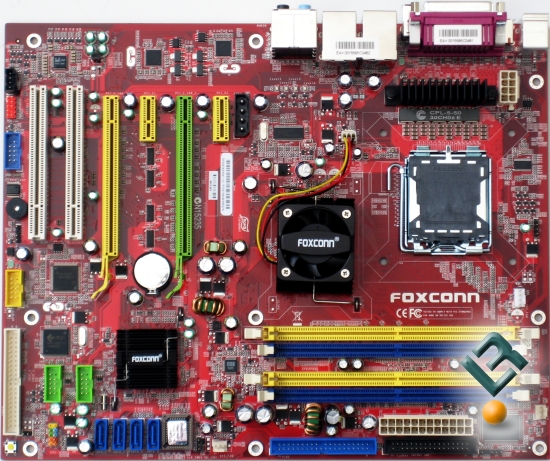
Tech Link (Motherboard): FOXCONN 975X7AB-8EKRS2H Motherboard Review

I know, I am on a posting spree, this is what's happening when you put a FanBoy on a vacation leave. It just gives me more time to brag and post and brag and post, what more can you ask from a FanBoy? Anyway, LegitReview got themselves busy with a nice motherboard from FoxConn. This motherboard is the only board that I know of that has a digital VRM to regulate power for the CPU. It looks ok, not attractive, but decent enough. The red PCB reminds me of standard board from MSI though, but anyway, check this out since LegitReviewer seems impressed.


Final Thoughts and Conclusion
So what do you say about a board that:a) Has a great layout with a great bundle; b) Performs as well as any other board out there; c) Overclocks like mad? You say that this board should be on the top of your list as you are looking at motherboards to house your brand new Core 2 Duo processor. Also, we should mention that this board comes in at a MUCH lower price than many other boards out there. Right now, you can pick this board up for a cool $159.99, which is much less than the $200+ that some of these new Core 2 Duo boards are retailing for.

One thing that should not be overlooked as we close up this review is the fact that Foxconn heard us when we let them know of a bios issue, and then within a matter of 72 hours, we had a new bios in hand, that had been tested by them over the weekend to make sure that it worked properly. This is almost unheard of anymore in the industry.

Feature-wise, this board has really everything you would want. And the bundle that comes with it is very generous considering the "low" price tag. The Foxconn 975X7AB-8EKRS2H motherboard can be found for $159.99 from online retailers, which makes it less than competing boards like the abit AW9D-MAX that we reviewed at the start of the week. The Foxconn 975X7AB-8EKRS2H represents great value from a price versus performance standpoint and an ideal motherboard for those looking to try out mild overclocking.

The ability to run a Crossfire setup also insures that you will be gaming to the best level that you can, and that you will be able to upgrade to a dual card setup if needed at a later date to extend the life of this board.

Legit Bottom Line: Foxconn really has outdone themselves with the offering of the 975X7AB. The performance and overclockability of the board are outstanding and the customer support is first class. This board certainly was not a "Dog" but a Fox to be desired. What more could you ask for in a board? With all that said, at $159.99, this board is certainly worthy of of value award for the 975X series of boards.


Source:FOXCONN 975X7AB-8EKRS2H Motherboard Review

Tech Link (Motherboard): Abit 975 board takes on two Asus contenders

If it's not for a friend and Abit, I wouldn't have posted this article. So anyway, INQ posted a "First Impression" look at Abit's greatest offering. It may not be the latest, but currently, it is the greatest. Be careful reading it though and try to develop a skill that will help you isolate the FUD from FACT when you are wading thru that freaky review. If you are ready, then take the plunge.


In Short
Abit made a great overclocker's motherboard. It has all the features that one would like and it is the 975X board that will run two ATI cards. We wonder if it will run two R600s but this will be the big question for 2007.

The board has a nice layout, illuminates the room with its LEDs, heat-piped chipsets and it make memory faster than any other 975 board we seen so far. It is great and it goes neck-to-neck with Asus' P5W DH Deluxe. It costs around €190 in Euroland depending on the country.

It is one of the best 975X boards we've come across. It is stable and worth the money but you can also consider Asus very good alternative. For dessert, we tried cableless Crossfire and have an answer to some of your questions on X1950PRO cards, we will try to tell you that story in 2007. ยต


Source:Abit 975 board takes on two Asus contenders

Friday, December 22, 2006

Press Release: Shuttle introduces newest lineup of gaming PCs - 1337 and 1337 SDXi system

Aside from the sucky model name of 1337, the new SFF system is very nicely done. With a custom paint job, a watercooled GPU, with an extreme Intel processor (Conroe or Kentsfield), Ati Radeon X1950 (Crossfire), 2GB of yummy Crucial DDR2-800MHz RAM, on a small form factor, this is just so freakingly awesome. This little wonder will set you $4999 at the minimum though, so it does have a hefty price tag to go with the looks and power.


Shuttle introduces newest lineup of gaming PCs - 1337 and 1337 SDXi system

Shuttle Inc, the world’s leading designer and manufacturer of small form factor computers and accessories have announced the launch of its newest lineup of gaming PCs—1337 and 1337 SDXi system. Shuttle 1337 systems bring together the best technologies the industry has to offer to make one blazing fast gaming system. 1337 systems are able to match performance of larger and louder tower systems without sacrificing the small form factor foot print.

According to Kevin Tu, Product Marketing Manager, “We made it our goal to extract the most performance from our existing XPCs without sacrificing portability for LAN parties. The Shuttle 1337 SDXi is the result, blending the best engineering we have to offer with the best technologies from Intel and ATI.”

The new Shuttle 1337 systems differ from the regular Shuttle XPC systems in form and function. Sporting a unique paint job and liquid-cooling system the Shuttle 1337 PCs deliver are truly unique in appearance. Every Shuttle 1337 system is painted with premium-grade glossy automotive paint by Smooth Creations for that customized touch. Paint jobs by Smooth Creations offer unmatched quality and craftsmanship. According to Smooth Creations PR representative Ashley Willis, “Quality is not expensive … it’s priceless!”

Liquid cooling is employed on 1337 systems to keep the graphics cards cool and quiet. Air-cooling can no longer cut it anymore with the increasing complexity of graphics cards. In the past users would have to install their own liquid-cooling system with fears of leaks. However, with Shuttle 1337 systems, you can have the cooling performance of liquid without the headaches previously associated with it. The liquid-cooling system employed in 1337 systems is completely self-contained, maintenance free and guaranteed not to leak.

Shuttle 1337 SDXi systems integrate the best technologies for blazing fast performance in games and applications. Powered by the Intel Core 2 Extreme Edition X6800 or QX6700 processor, 1337 SDXi systems deliver two and four cores of processing with seamless multitasking capabilities. Joining the Core 2 Extreme processor is a pair of AMD ATI Radeon X1950XT graphics cards in CrossFire. The pair of ATI Radeon X1950XT graphics cards delivers breathtaking visuals with outstanding performance.

System Specifications

Intel Core 2 Extreme X6800 or QX6700
2x AMD ATI Radeon X1950 XTX CrossFire
2GB Crucial Ballistix DDR2-800
Western Digital Raptor 150GB
Fully internal liquid-cooling system
Premium glossy automotive paint
Shuttle 1337 SDXi systems will be available late December starting at $4999.


Source:Shuttle introduces newest lineup of gaming PCs - 1337 and 1337 SDXi system

Thursday, December 21, 2006

Tech Link (Motherboard): abit AW9D-MAX i975 Express Motherboard Review

I highly agree with the author over at LegitReviews about their impression on this board. It has pushed my Conroe Extreme up high there in the clouds, along with the angels and cupids, err, I mean, you get the idea. But be forewarned though, this isn't engineered for QuadCore, at least, not at the current official bios release. Here's the snippet, and you can check out their site for more....


The abit AW9D-MAX motherboard is one of the best Intel 965P/975X motherboard that I have used to date. It's actually refreshing using a motherboard like the abit AW9D-MAX because everything just works out of the box. The NVIDIA 680i chipset has gotten a ton of attention in recent weeks, but at the same time it launched with numerous bugs that are just now starting to be taken care of via BIOS updates. The Intel 975 Express chipset has been on the market for over a year and has 99% of the bugs worked out, which is nice for those of us that want to set up their system with a stable overclock and be done.


Source:abit AW9D-MAX i975 Express Motherboard Review

Friday, December 15, 2006

Tech Link (Motherboard): NVIDIA nForce 680i Chipset Problems

It's a shame that such a very promising chipset will be plagued by some many issues. I have actually given up my eVGA 680i board because of the many issues, but the killer one for me is that performance. Clock for clock, and for it's price, I just can't justify owning this board anymore, it can't even compete with a motherboard from Asus based on i965.

Anyway, the cool thing about this board is that it supports Conroe Extreme as well as Kentsfield Extreme and of course, native SLI rather than hacked driver. Actually, the native SLI is the only factor that made me try this board, other than that, it's just not worth it. If you like high FSB, this board will be your board. If you like native SLI, this will be your board. If you like decent stock performance, then this is your board. But if you like overclocked + outstanding performance + stable, then look for another board. Check out HardOCP's article, if you would like to know more.


Out of the gate, the nForce 680i chipset from NVIDIA seemed to be the best Core 2 Duo overclocker going, that is of course when your system is not plagued with BSODs and data errors. You need to read this if you are considering a 680i motherboard.


Source:NVIDIA nForce 680i Chipset Problems

Thursday, December 14, 2006

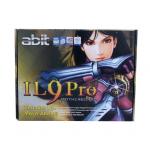
Tech Link (Motherboard): abit IL9 Pro Motherboard Review

If you are looking for an affordable motherboard, that supports the latest Conroe processor, and supports Crossfire, well, look no further because a nice board is available from Abit. Not the latest chipset, but this i945-based board makes it also cheaper than other boards that supports Conroe. If you are looking for one, motherboards.org reviews one and you may want to consider this board as your next board.


Intel generally releases two new motherboard chipsets a year, a high-end one and a mainstream one. In 2004, when Intel released the 925X high-end chipset, they also released the 915 mainstream. 2005 saw the release of the 975 chipset for the high-end and the 945 chipset for the mainstream. This year the 965 chipset was released but the 945P chipset remains for the mainstream inexpensive market. The board on the test bench today is the abit IL9 Pro board they recently announced.


Source:abit IL9 Pro Motherboard Review

Friday, December 08, 2006

Tech Link (Motherboard): Never mind Striker bring on Commando

Seems like Tony (of OCZ) have finally agreed that 680i isn't necessary = best performance. I'd only get this for "certified SLI" support for current and future high end video cards, I'll always go for Chipzilla chipsets for everything else aside from SLI. I really wish Chipzilla will finally close a deal with NVIDIA* so that i975 will have SLI support without the hacked drivers. It's just a matter of driver/chipset identification to enable SLI rather than technological limitation (yes, for the uber anal, chipset and driver is part of the technology, but duh).

In any case, over at TechRepository, Tony has posted some really neat screenshots of the BIOS and he seems to have lotsa fun testing. I went to XS and I also saw his post. His header is much cooler there than what is posted on their persnal Tech Blog, so that's why I used his "Never mind Striker bring on Commando" title. Enjoy!


All the excitement about DFI had me forgetting another board which i will be testing over the next few weeks. Asus have released what could possibly be the finest i965 board we will see. Codenamed commando the board is part of the ROG line of boards which also have crosshair and Strker extreme as members.

I have the board and can say I have not yet tested a board that overclocks DDR2 better than this one, if you want to run 1300+DDR this is the board for you

Voltage options are nothing short of stunning, i will post screen shots in the next 24hrs so sit tight. Tests to come in the nex week or so.

1 pic for your enjoyment, you may see others posted as Asus gave a sneek peek of the board here in taiwan at the 1st OCZ Overclocking summit.


Source:Never mind Striker bring on Commando

Friday, December 01, 2006

Article: Intel® Core™ 2 Extreme QX6700 Preview (World's Best Gaming Processor Just Got Better)

I finally managed to edit the article and before I forgot to post it up, I am posting it now rather than later. Sorry for the typo, and some repeat info. If you would like to go to the benchmarks, then skip two pages.

In any case, I just want to say that this processor is really the cream of the crop. Others will begin to ask, how this processor is positioned against the dual core Conroe Extreme. Well, it's easy, really. Conroe Extreme is geared for the best gaming experience available today, that isn't really taking advantage of dual cores (more so for quad cores). The Conroe Extreme has more clock speed so game benchmarks and FPS should be alot better than Kentsfield Extreme. But if you would like to get gaming + heavy multi tasking, then you can always go for Kentsfield.

And oh, if you're a "megatasker" like what AMD would like you to believe they are positioning their Quad FX aka 4x4, then it's better to go for dual socket Clovertown since 8 cores will definitely be better and with FBDIMM, you're going to be assured of data accuracy across all your running applications. But I am going way off topic, for now, here's my own Kentsfield Extreme preview.


The Intel?Core?2 Extreme QX6700 Processor is currently the only desktop processor that features a total of four cores. The processor boasts of superb multi-threading support backed up by the already establised "core" uA. This processor have lower clockspeed than the earlier released Intel Core 2 X6800 by as much as 266MHz. It will be interesting to pit the two against each other and see how and where the new champion from Chipzilla excels.

A word of caution for the ambitious though, this processor is definitely not for everyone and is only targetted for those who have heart and soul to pour in addition to a lot of money. The processor doesn't come cheap, and it's far from being mainstream and it should because this is the first time, in the history of computing, that four cores has come to the desktop.


Source:Article: Intel?Core?2 Extreme QX6700 Preview (World's Best Gaming Processor Just Got Better)

Friday, November 03, 2006

Brag: Kentsfield is now on the loose....

Ok, I'm late with the posting but all I can say is that, wohooo, it's a great day today. I didn't know, or I might have missed it, that embargo for releasing the performance results has been pulled in to November 2. I guess, I won't be posting my numbers anytime soon, I am leaving for IDF in China next week. In any case, busy yourselves with *some* of the reviews on the web. Expand for more...


XBitLabs
Conclusion
Summing up I have to state that it will be very hard to draw a final line today. The thing is that Kentsfield processors have evidently got far ahead of their time. There are not that many applications yet that could use the potential of all four cores and load them to the full extent. In fact, these are only 3D rendering tools, video editing tools and a few codecs. These are the few applications where multi-core architecture can show its real best and prove adequate to its theoretical potential. Since there are not that many optimized applications, Kentsfield processors cannot yet become the ultimate leaders from the performance-per-watt prospective. Dual-core Conroe based CPUs still retain the leadership here.

However, despite this fact, Core 2 Extreme QX6700 launch is definitely a success. Firstly, Intel was brave enough to push the multi-core concept into the market. Intel was the one to give software developers to understand that the time has come to revise their algorithms dramatically. The upcoming year 2007 should become a turning point: we expect a lot of new applications that would benefit from systems on multi-core processors.

Moreover, smart pricing policy makes Core 2 Extreme QX6700 a very attractive purchase today already. Its frequency is only 10% lower than that of the top Conroe CPU, Core 2 Extreme X6800. So, Core 2 Extreme QX6700 will be just a little bit slower than the predecessor in applications that do not support multi-threading. However, the are priced equivalently, so that the users looking at the price-to-performance ratio in the first place will be able to consider Kentsfield as a possible good choice. Especially since it will be extremely efficient in case of several tasks running in parallel even if they are not optimized for multi-threading. And in optimized apps, Core 2 Extreme QX6700 is unattainably fast.

So, even if you do not yet see any tangible benefits from the quad-core Kentsfield processors for your particular case, the situation will undoubtedly change very soon. This new Intel solution has big future ahead.


THG
The dust still hasn't settled from Intel's Core 2 Duo market shakeup, a technology that allowed Intel to definitively take back the performance crown it has spent so many years battling to grasp. The Core 2 Quadro adds heat to the fire by doubling its performance potential.

Doubling the number of simultaneously-executable threads by doubling the number of cores, however, is just as likely to double power consumption and heat output. This comes at a time when most users cannot yet even take full advantage of current dual-core capabilities; a time when most PC software is written for two cores at most; a time when Intel's reputation is still recovering from the heat nightmare that was the Pentium D; and a time when mass marketing is shifting towards tiny boxes. In other words, Core 2 Quadro is probably the last thing the mass market needs right now. Knowing this, Intel is releasing only enthusiast-level versions.

But Intel's timing is neither poor nor coincidental: AMD's first quad-core release is expected in approximately two weeks. While most technology analysts don't expect anything revolutionary in terms of performance gained, it remains to be seen whether AMD's new product is evolutionary enough to tighten the race. HyperTransport's bidirectional nature might play a key factor in making AMD's solution more competitive, while other planned updates may further enhance scaling and IPC.


TechReport
Conclusions
Like any solution with four CPU cores, the Core 2 Extreme QX6700's effectiveness depends on what you feed it. Give it a nicely parallelizable task with four or more threads, and it will utterly embarrass former top dogs like the Core 2 Extreme X6800 and the Athlon 64 FX-62. For applications like video encoding, 3D rendering, image processing, and scientific computing, the QX6700 trumps all other desktop processors—and, I suspect, a great many dual-socket Opteron workstations. 3DMark06's multithreaded CPU test gives us a glimpse of how multithreaded gaming might look, and the QX6700 performs very well there, too.

Feed it a simple app with only one or two threads, though, and this quad-core monster begins to look an awful lot like a Core 2 Duo E6700 with higher power consumption and a much steeper price tag. Of course, even that isn't a horrible place to be. In single- and dual-threaded applications, the QX6700 still wallops the Athlon 64 FX-62 nearly across the board, with similar power requirements and heat output. That fact simply underscores how good the Core 2 lineup truly is.

Still, this is very much an Extreme processor in every sense. As I've said in various ways over the years, I happen to think forking over a grand for a CPU is sheer insanity. If you do write that check, though, be prepared to write another one for a good water cooling system. Most air coolers that could keep this thing cool would simply be too loud for my taste, and you won't want to attempt much overclocking with air cooling.

This quad-core CPU puts Intel in the same tricky position that the GPU guys have had to endure from time to time: the hardware is now well ahead of software development, particularly in mainstream consumer applications and games. Many owners of this beast may be stuck waiting for new applications to arrive that use it to its fullest ability. Like I said, though, I'm confident the applications will come, and when they do, the Core 2 Extreme QX6700 may well be the best option for running them.

Soon, the QX6700 should get some competition in the form of AMD's so-called 4x4 platform. Can AMD unseat the QX6700 using dual-socket motherboards? Interesting question. I have my doubts, but I suppose we'll soon find out.


Enjoy....

Sunday, October 15, 2006

Rant: Too many toyz, so little time. Kentsfield QX6700@QX6900

Well, I have been quite busy and I have to say that I have been neglecting all my hardware again. It's no suprise, it has always been like that, my reports about these hardware has always been sent just before the deadline (luckily). I have just sent my findings about overclockability, stability, application performance, compatibility and all other details about the new baby to make sure these will be problem free when it becomes available. The gist of the report? Well, aside from what you have probably seen from the websites about benchmarks, all I can really say is that these quad cores are as solid as a rock.

I have put this Kentsfield thru overclocking, and torture testing and they have stood the test of time. This particular CPU-Z is taken after almost two(2) days of Prime95 (four instances) with looping 3DMark2001 in the background and Mcafee AV running the background.

I can't ask for more with these babies. Performance is superb with multi-core aware and multi-threading applications. It is the fastest CPU I have used in the desktop so far and I have to give this a thumbs up. If you plan to get these Quad Core babies, start saving up. Till then, hope to see you on the Intel vPro launch this Tuesday and Wednesday. I'll be there too!

Sunday, October 08, 2006

Tech Link (Industry): Intel shows off quad-core gaming power (video)

I just got this link from the forum I regularly visit. It's one of the showcases at IDF, where they have shown the power of quad core computing. Expand for more...


Why do we need quad-core processors? The answer is as old as the question itself: gaming and video rendering.

Rendering a video makes for lousy demonstration, so Intel again opted for the game demonstration at its Intel Developer Forum today in San Francisco.

But as we were rendering the video below, I was dying for a nice multi-core processor to replace the old single core model that currently powers my laptop.


Source:Intel shows off quad-core gaming power (video)

Thursday, October 05, 2006

Brag: Intel® D975XBX rev304 supports Kentsfield!

Yay, I just figure I'll try and test if my Bad Axe (Intel® D975XBX) rev304 (no, not the Bad Axe 2) will boot up a Kentsfield and lo and behold, it does so without problem. You can click on the image to go to the validation link. Expand for more...

Most people know that Kentsfield will be released partnered with the second generation Bad Axe. While I still suggest for people without much budget to use their older Bad Axe, I'd still push people to go ahead and purchase the newer motherboard based on Bad Axe 2 since it offers more overclocking options (2.8v for your DDR2 for example).

But again,if you don't have enough budget or still saving up, your older rev304 Bad Axe will work without problem. I even transformed the Intel® Core™ 2 Extreme QX6700 to Intel® Core™ 2 Extreme QX6800 by just changing the multiplier. Neato!

Saturday, September 30, 2006

Tech Link (Processor): Quad Cores: Intel Kentsfield Preview

AMDTech is on a reviewing spree of Chipzilla processors. They have soon turned colors again, from Green to Blue, you know, like how "balimbing" always does. In any case, they are still marked as AMDTech judging at how they used to throw stones against Chipzilla, always saying how FSB is a bottleneck bla-bla.

If anything, it is A* that has not improved much, just "bolting" the memory controller is not enough and Chipzilla proves that even with the "bottlenecked" FSB (yeah, right), processors can still do a lot lot better. Watch out for even more performance improvement features from Chipzilla, such as this Quad Core!!!! Don't worry FanBoyz, I'll post one up too, it's just that my Bad Axe 2 motherboard is giving me headaches (ha, the fun working with engineering samples). Expand for more...


Closing Thoughts

With only a 266MHz difference in clock speed, the new Core 2 Extreme QX6700 isn't too hard of a choice to make. When Intel introduces a lower cost 2.40GHz Core 2 Quad version, things may get a little more complicated, but at the very high end we would rather have four slightly slower cores than two slightly faster cores. We expect that there will be some improvements in multitasking performance, especially if you have a decently fast I/O setup, and don't forget the performance boost you'll get in well threaded applications.

The first quad-core CPUs will be available in November of this year, with more affordable offerings being introduced early next year. Building on top of the already excellent performance of Intel's Core 2 Duo processors, Intel's quad-core solutions will offer a very attractive upgrade path for those users that have invested in the right motherboards today. We're currently working on putting together a list of all currently shipping motherboards that will support Kentsfield to best help you plan for a more upgrade-friendly machine, and we will have the initial list available later today.


Source:Quad Cores: Intel Kentsfield Preview

Tuesday, September 26, 2006

Tech Link (Processor): Intel "Kentsfield" Performance Explored

AMDTech can't control it anymore and shows some benchscores of the Kentsfield Quad Core processor. Media buffs would definitely love these babies, reducing workload and tasks in no time at all. If you are gearing up for a win, then go Kentsfield (or Conroe)! Expand for more...


Power consumption and performance explored

DailyTech has managed to snag an Intel Kentsfield Core 2 Quadro Q6600 for some in-house testing. The Kentsfield Core 2 Quadro Q6600 is clocked at 2.4 GHz with a 1066 MHz front-side bus. It’s equipped with 8MB of total L2 cache. Unlike Intel’s Conroe Core 2 Duo processors, the cache configuration of the Core 2 Quadro Q6600 is 2x4MB with each set of dual-cores sharing a single 4MB pool of L2 cache. This is because Kentsfield processors are essentially two Conroe dies fused together to form a single processor—similar to how the original Smithfield Pentium D 800 series was.

Strangely the Kentsfield Core 2 Quadro Q6600 did not support Intel’s Enhanced Speedstep Technology. Whether or not this is a result of an early engineering sample is unknown at the moment. The Core 2 Quadro Q6600 does support a C1E Halt state for decreased power consumption. Speaking of power consumption, Intel has done an excellent job optimizing power consumption for its quad-core Kentsfield.

Our power consumption measurements were conducted using a Kill-A-Watt power meter that measures the power draw of the complete system from the wall outlet. The test system consisted of:

ASUS P5W DH Deluxe
Kingston HyperX DDR2-800 2x1GB
ATI Radeon X1900XT 512MB
Creative Labs Sound Blaster X-Fi Xtreme Music
Silverstone ST60F 600 watt power supply
Seagate 7200.8 300GB
Windows XP Professional

Intel Kentsfield Power Consumption

Watts
Core 2 Extreme
X6800
Core 2 Quadro
Q6600
Idle 154 198
Load 202 223

Power consumption compared to Intel’s current flagship Core 2 Extreme X6800 isn’t too bad at idle with the Core 2 Quadro Q6600 consuming 44 more watts. The higher power consumption is due to the Core 2 Quadro Q6600 lacking Intel’s Enhanced Speedstep Technology that lowers the clock speed of the processor during idle.

Power consumption under a load of 3D Studio Max 8 rendering a complex model with all four cores utilized is quite good. A total of 223 watts was drawn from the wall with the Core 2 Quadro Q6600 under load. This is quite low when compared to the Core 2 Extreme X6800 that draws around 202 watts under the same condition. We were quite surprised Intel has managed to keep power consumption relatively low with four cores.

We were able to run a few quick benchmarks with the Core 2 Quadro Q6600 as well. For comparison purposes we have a benchmarks from a Core 2 Extreme X6800 and Core 2 Duo E6600 as a reference. A real Core 2 Duo E6600 wasn’t readily available for testing so we dropped the multiplier of the Core 2 Extreme X6800 down to 9x. Performance of a real Core 2 Duo E6600 and our Core 2 Extreme X6800 clocked down to E6600 speeds should be identical.

SiSoft Sandra 2007 CPU-Arithmetic
MIPS

Core 2 Extreme
X6800
Core 2 Duo
E6600 Core 2 Quadro
Q6600
ALU
27025
22261 44522
FPU
18641
15257 30513


SiSoft Sandra 2007 CPU Multimedia
MIPS

Core 2 Extreme
X6800
Core 2 Duo
E6600 Core 2 Quadro
Q6600
ALU
161548
132140 263973
FPU
87561
71619 143084


Performance is as expected with SiSoft Sandra. Clock for clock the Core 2 Quadro Q6600 has nearly twice the raw performance of the Core 2 Duo E6600. This isn’t too surprising as the Core 2 Quadro Q6600 has twice as many cores.

3D Studio Max 8 Performance
Time

Core 2 Extreme
X6800
Core 2 Duo
E6600 Core 2 Quadro
Q6600
Min:Sec
16:45 20:20 11:00


Cinebench 9.5 Performance
Time

Core 2 Extreme
X6800
Core 2 Duo
E6600 Core 2 Quadro
Q6600
Seconds
24
30 17

3D Studio Max 8 scales very well with four cores, as expected. Cinebench 9.5 shows similar gains as well. The Core 2 Quadro Q6600 shows a near 2x performance increase compared to the Core 2 Duo E6600. This is quite expected, as 3D rendering applications will use all available processing power.

Windows Media Encoder 9
Time

Core 2 Extreme
X6800
Core 2 Duo
E6600 Core 2 Quadro
Q6600
Seconds
59
72 45


TMPG Encoder
Time

Core 2 Extreme
X6800
Core 2 Duo
E6600 Core 2 Quadro
Q6600
Seconds
407
486 289

Multimedia encoding performance shows modest gains considering the number of threads have doubled. This is most likely due to Windows Media Encoder 9 and TMPG Enc’s lack of multi-core optimizations. TMPG Enc still detects multi-core processors as a single Hyper Threading equipped processor and not using all four processor cores. Hopefully Microsoft and Pegasys Inc. will release updated multi-core aware versions of its applications in the future.

Quake 4


Core 2 Extreme
X6800
Core 2 Duo
E6600 Core 2 Quadro
Q6600
FPS
86.37
73.5 75.9


Serious Sam II


Core 2 Extreme
X6800
Core 2 Duo
E6600 Core 2 Quadro
Q6600
FPS
203.83
176.2 174

Gaming performance is as expected of quad-core. It offers nearly the same performance clock for clock as its dual core counterparts. Quake 4 with the latest patch is supposedly optimized for multi-threading shows minimal performance gains. The higher clocked Core 2 Extreme X6800 still manages to beat out the Core 2 Quadro Q6600 though. Games that aren’t multi-threaded such as Serious Sam II shows little to no difference in performance.

Overall Intel’s Kentsfield performs as expected. It will scale very well in multi-threaded applications such as 3D Studio Max, Cinebench and other 3D modeling applications or encoding applications. Unfortunately, unless the application is multi-core aware or optimized for multi-threading the performance gains are minimal if not absent. While the move to quad-core hardware may be exciting, software support is still trailing behind. Although Intel positions its quad-core Kentsfield Core 2 processors as a high-end part, the soon to be released Kentsfield Core 2 Extreme QX6700 and Core 2 Quadro Q6600 appear to be a better mid-range workstation part rather than enthusiast gamer part—especially since there’s very little overlap with the Intel Xeon 3200 series.


Source:Intel "Kentsfield" Performance Explored

Monday, September 11, 2006

Tech Link (Processor): Intel's Core 2 Quadro Kentsfield: Four Cores on a Rampage

If you want to further enhance your FanBoy skillz, check out THG's latest QuadCore article. Is it a coincidence that they post it in the anniversary of 9/11? Who knows, I haven't read the full article anyway. Bah, am too busy with work right now that such a 10+ pager article will eat up my time, I'd rather scour the web for more info to bring to your plate everyday (yes you, my dear visitors).


Editor's Opinion
For me, working with one of the first quad core systems was amazing. No matter how many applications you run at the same time, the system reacts to user commands quickly. Some applications require half the time to finish tasks. To me, it's like being catapulted a year into the future and is unlike the past few years when computing power increased only marginally. Intel pumped out 30% more performance with Core 2 Duo and will double that again with Core 2 Quadro soon.


Source:Intel's Core 2 Quadro Kentsfield: Four Cores on a Rampage